
Last updated: 2026-06-16
Last updated: June 2026
What is a drought tolerant ground cover in San Diego?
A drought tolerant ground cover is a low-growing plant that spreads across soil while using very little water once established. On San Diego coastal lots we plant dymondia, creeping thyme, trailing rosemary, and native dune sedge. They take Coronado salt air and full afternoon sun, and they replace thirsty lawn without browning out by August.
We get asked about ground covers on almost every drought-tolerant job. Most homeowners picture gravel and three sad cacti. That is not what low-water planting has to look like.
A good ground cover knits together into a soft green mat. It chokes out weeds, holds the soil, and cuts your water use way down once the roots take hold.
The ground covers we plant most on Coronado lots
Coronado yards face two problems at once. Salt air off the bay, and full afternoon sun on the beds along Ocean Blvd and 1st St. Not every plant tolerates both.
Here is what we reach for, and where each one earns its spot.
| Ground cover | Water need | Best spot | Foot traffic |
|---|---|---|---|
| Dymondia | Very low | Full sun, between pavers | Light |
| Creeping thyme | Low | Walkway gaps, sunny beds | Light |
| Trailing rosemary | Very low | Slopes and wall tops | None |
| Native dune sedge | Low | Lawn substitute near the water | Moderate |
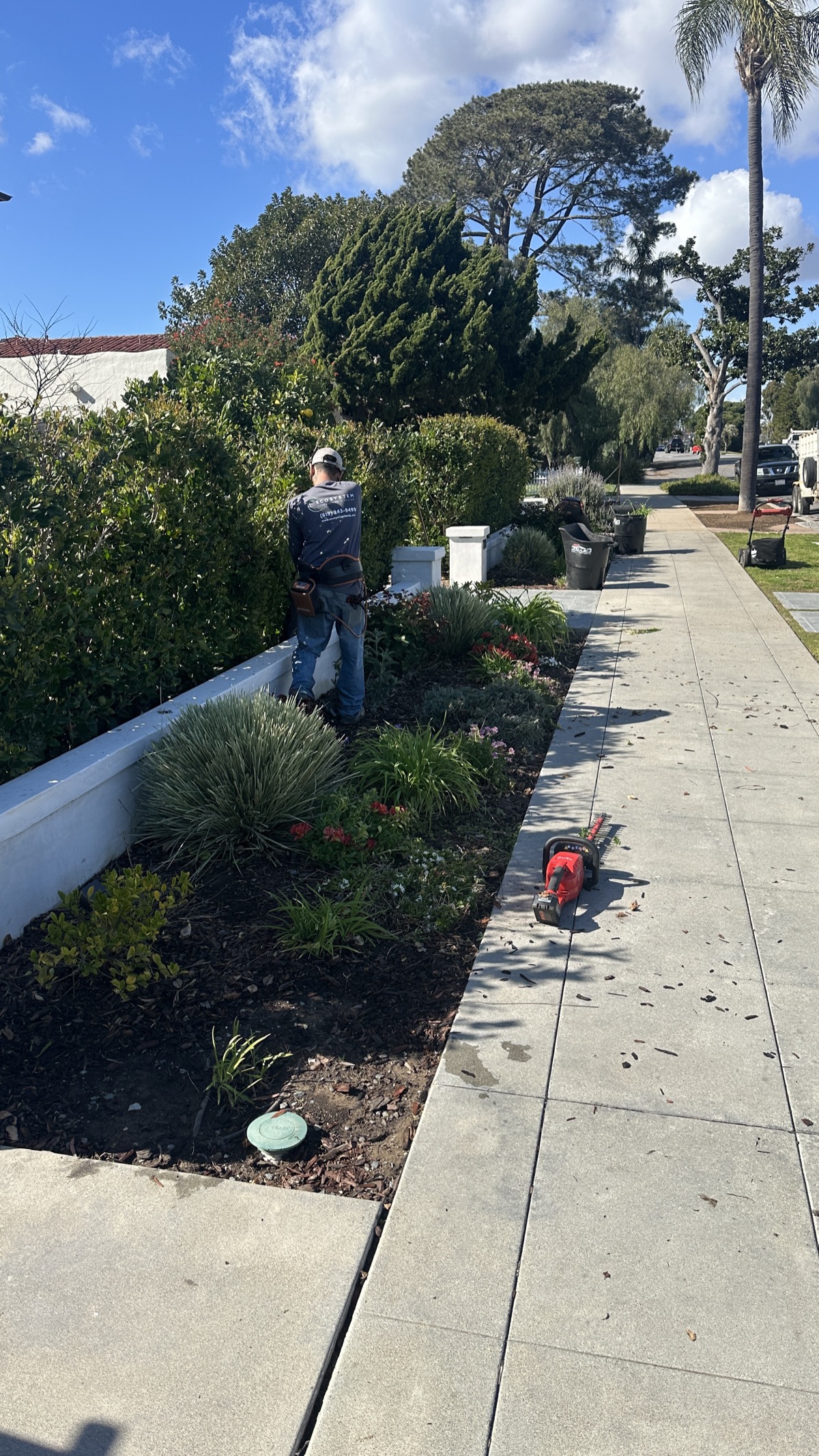
Dymondia margaretae
Silver-green, flat to the ground, takes light foot traffic. We use it between pavers and as a lawn substitute on smaller lots. It wants good drainage and full sun. Space plugs about 6 to 8 inches apart and it fills in over a season.
Creeping thyme
Smells great when you step on it. Handles heat and draws bees when it flowers. Good for the gaps in a walkway on the older avenues.
Trailing rosemary
For slopes and the tops of retaining walls, especially on Point Loma jobs below Sunset Cliffs where we need roots holding a grade. Practically bulletproof in coastal sun.
Native dune sedge
Carex pansa. The closest thing to a real lawn that still sips water. It takes salt air without burning, which is why we lean on it within a few blocks of the water.
How much does a drought tolerant ground cover cost?
Cost depends on the plant and how fast you want full coverage. Bigger plants or tighter plug spacing cost more up front but fill in faster.
As a rough range on a Coronado job, expect somewhere around $6 to $14 per square foot installed, including soil prep and the plants. Dense plug planting of dymondia or sedge lands at the higher end. Spacing things out to save money means waiting longer for the mat to close and pulling more weeds in the meantime.
Salt air changes the math too. We will not put in plants that look great at the nursery and fry near the water.
Getting ground cover established
The first 8 to 12 weeks decide everything. Roots have to reach down before you can back off the water.
- Prep the soil and clear every weed root first.
- Plant plugs at the right spacing for the species.
- Water daily for the first two weeks, then taper.
- By month three most of these are on a deep, infrequent soak.
Sam walks the property, draws the plan, plants it, and comes back to prune and check spacing once it settles. We did exactly that on a bed near 1st St where the old sod browned out every August. One season later it was a full green mat on a fraction of the water.
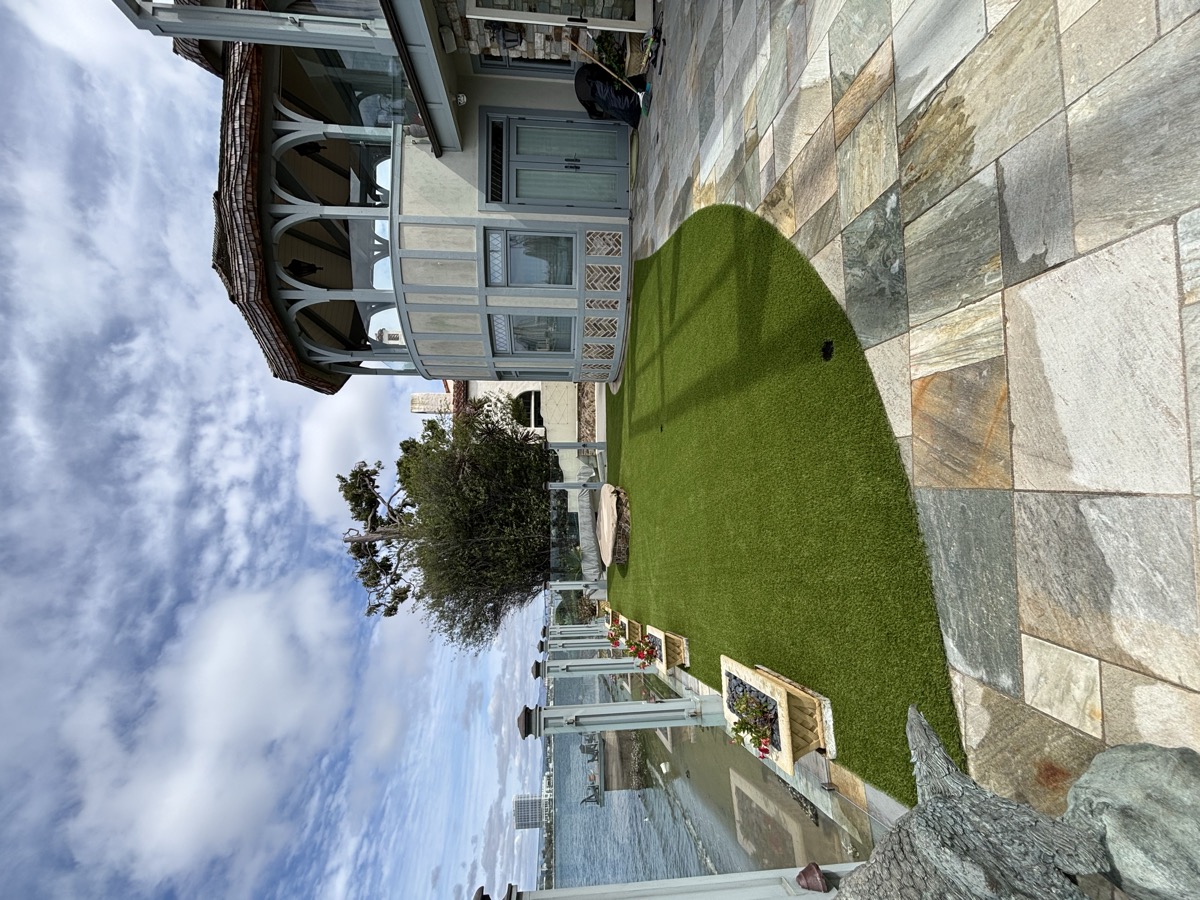
If you want to see real Coronado yards we have planted, the portfolio has them. You can read more about our drought-tolerant landscaping approach, or how we work across Coronado and the coastal neighborhoods nearby. If we replanted a bed for you, we would love a Google review that mentions your street and what we put in.