
What artificial grass costs on a Coronado lot
Artificial grass in Coronado usually runs $9 to $15 per square foot installed, so a 200 square foot patch lands around $1,800 to $3,000. Living sod runs closer to $2 to $4 per square foot installed, and a drought-tolerant planting bed often costs less to keep alive than either surface over ten years.
Last updated: July 2026
The BBC ran a piece crediting Norway's golden generation of footballers to artificial turf, on the logic that a kid in Bergen can train on plastic in February and cannot train on frozen grass. That is a fair argument. It is also an argument about a climate that has nothing in common with ours.
Coronado grows grass almost year round without being asked.
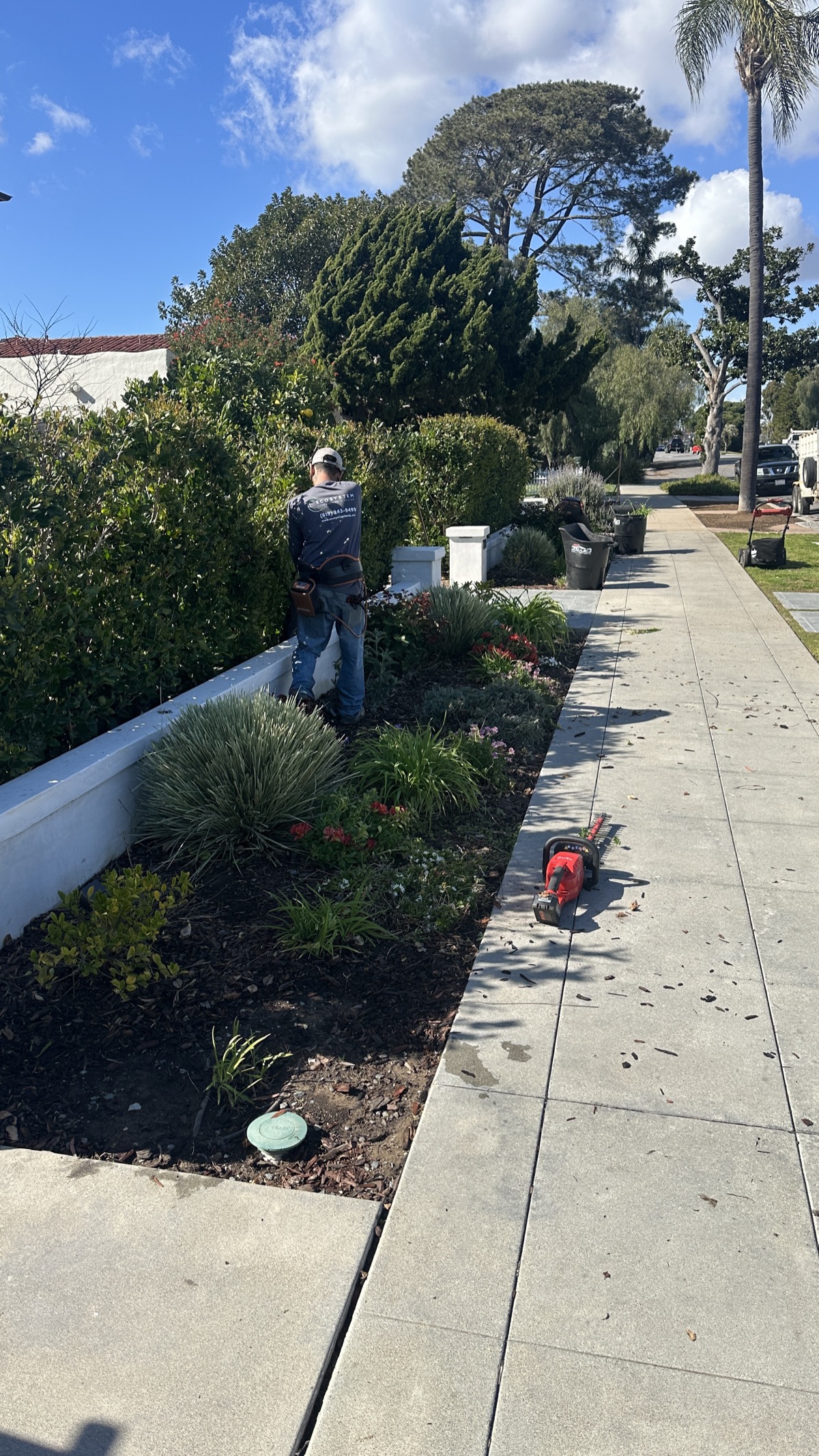
We still get the question, usually from a homeowner off J Ave with two dogs and a bare patch by the side gate, or from somebody on 1st St tired of paying metered water for a strip of lawn nobody walks on. So here is how the numbers actually shake out on an island lot.
How much does 200 square feet of turf cost?
Installed synthetic grass on a small Coronado yard sits in the $9 to $15 per square foot range once you count demo, haul-out, base rock, compaction, edging, and infill. That puts 200 square feet at roughly $1,800 to $3,000.
The spread is not the plastic. It is the access.
On the older lots off B Ave and C Ave, the side yards are narrow enough that every yard of base rock reaches the back in a wheelbarrow. Same product, same square footage, more hours. A wide-open back yard with a driveway we can stage off runs at the bottom of that range.
Sod on the same 200 square feet runs about $400 to $800 installed, plus soil prep. We rip and amend 6 to 8 inches before anything gets rolled out, because sod laid on compacted island fill roots shallow and browns off in the first hot week.
The part people miss: plastic is not permanent. Infill migrates, seams open at the traffic lines, and a dog run surface starts looking tired long before the warranty says it should. Budget a replacement conversation somewhere around year eight to ten, and budget rinsing it, because urine does not drain away on its own out here the way it does on soil.
Artificial grass vs sod vs drought-tolerant planting
| Surface | Installed cost per sq ft | Water | How it handles salt air | What it costs to keep |
|---|---|---|---|---|
| Artificial grass | $9 to $15 | Rinsing only | Fine, but the metal edging and fasteners under it corrode | Rinse and infill top-ups, replace around year 8 to 10 |
| Living sod | $2 to $4 | Highest of the three | Salt stresses the blade and the irrigation feeding it | Mow, edge, feed, and a sprinkler system that has to be built for salt |
| Drought-tolerant beds | Varies with plant count | Lowest once established | Best of the three if the palette is picked for wind and salt | Pruning and a drip line, no weekly mow |
Why salt air changes the math
Every surface out here is really an irrigation question first.
Salt sits on everything by evening on the bayfront blocks. We have planted the beds at 667 Ocean Blvd and 545 Ocean Blvd, and the pattern is the same on both: plated hardware pits out, cheap heads seize, and the leak shows up under the pavers instead of in the lawn. We set brass and stainless heads and pressure-rated PVC before hardscape goes down, because trenching a finished patio is the redo nobody wants to pay for.
Plastic grass does not need water, but the base under it still needs to drain, and the edging holding it still corrodes. People buy synthetic thinking they have opted out of the maintenance. They have opted into a different one.
Watering the living stuff is a technique problem more than a volume problem. Two short cycles beat one long soak on our sandy fill, because the second cycle goes into soil that is already open instead of running off the crown.
Where plastic still earns its place
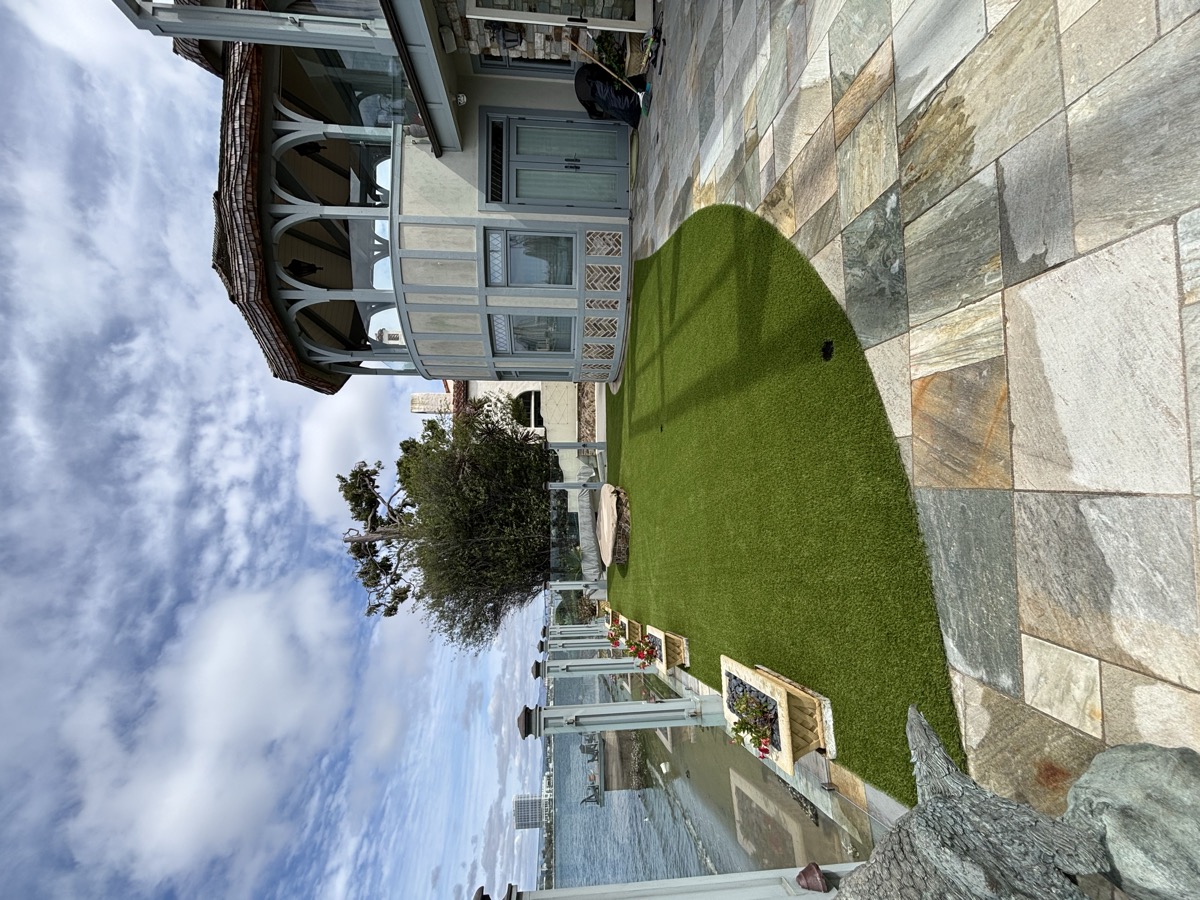
Narrow north-facing side yards. Dog runs. The strip between the house and the fence on a 745 J Ave style lot where a mature tree throws shade all day and grass has never once filled in.
We will install it there and we will tell you why. What we will not do is wrap a whole front yard in it on a street where a design review board has expectations about plant palette, or where the 42-inch hedge rule already shapes what the front reads like from the sidewalk.
More of that reasoning is in our write-up on why FIFA said no to plastic turf and what it means for Coronado yards.
What we plant instead on most lots
On the majority of jobs we end up shrinking the lawn rather than replacing it with plastic. A smaller patch of real sod where the kids actually play, and drought-tolerant planting doing the work everywhere else.
That keeps a Coronado front green without leaning on the metered water rate, and it holds up to afternoon sun off the bay in a way a catalog plant from an inland nursery will not. Samuel walks the lot, reads the exposure, hand-draws it, plants it, and comes back to prune.
If you want real sod done right for the salt, read installing sod that survives Coronado salt air, or see the streets we work on our Coronado landscaping page.
If we planted or maintained your yard in Coronado or Point Loma, mention the street and the work in a Google review. Specifics help the next neighbor more than a star rating does.
The J Ave side yard we did last season is still plastic, still shaded, still fine. The front beds on the same property are alive, and that is the split we recommend more often than not. Ecosystem Landscaping and Design, CSLB #1152146, bonded and insured.