
Last updated: July 2026
Why a World Cup pitch is worth selling by the square foot
Stadium pitch sod is grown on a mostly sand rootzone with drainage engineered underneath it, which is why it holds up to hard use and sells as a souvenir. A Coronado lawn gets a smaller version of the same idea: sand-heavy soil prep, real drainage, and salt-rated irrigation before the sod ever lands.
FIFA plans to sell off the final's pitch in pieces. Grass as memorabilia.
It reads as absurd until you have built a sand-based profile yourself and know what sits under those two inches of green. That pitch is not dirt with grass on it. It is engineered from the bottom up.
A stadium profile is roughly 12 inches of mostly sand rootzone over a gravel drainage blanket, with perforated pipe running below that. Water leaves fast. Roots get air. The turf takes a stud tearing through it on a Saturday and knits back within the week.
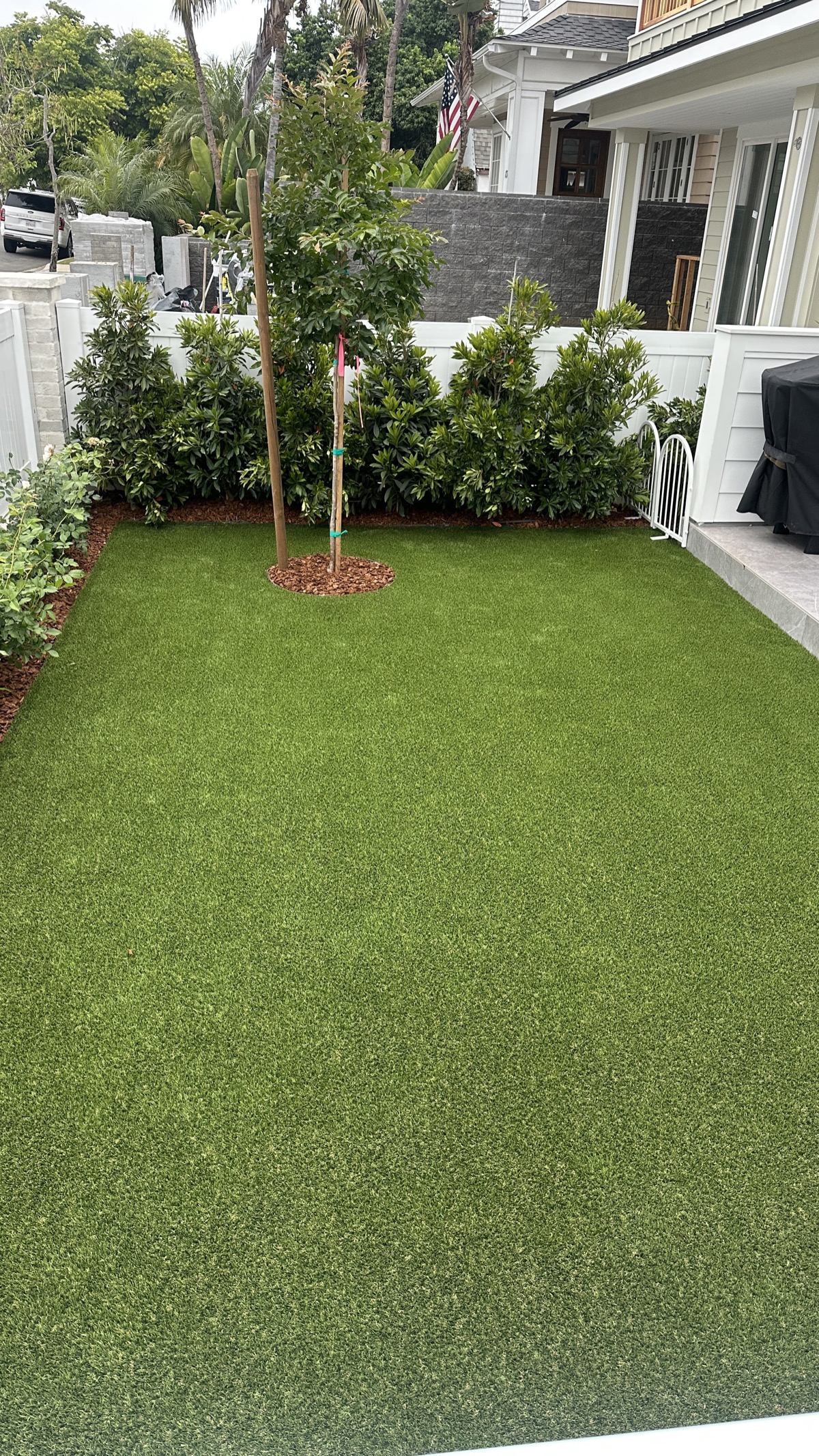
What does that have to do with a lawn in Coronado?
More than you would think. The failure mode on this island is the same one a bad pitch has, which is water that cannot get anywhere.
Coronado lots sit on sand already, but the top 6 to 8 inches of most older yards off B Ave and C Ave is decades of compacted fill, tree roots, and whatever the last crew rototilled in. Sod laid straight onto that will green up for one season and then thin out from the middle where the grade holds water.
We pull the old lawn, haul it out, and rebuild 3 to 4 inches of amended soil with real sand content before anything green goes down. Then we set the fall so water runs off the lot instead of sitting against the house.
And we reset the irrigation first. Always first. Salt air pits cheap plated hardware fast out here, so we run brass and stainless heads on pressure-rated PVC, and we would rather trench before the sod than through it. That is the same reason we wrote up why Coronado sprinkler systems corrode faster than the rest of San Diego.
Stadium pitch vs a Coronado front lawn
| Factor | Stadium pitch | Coronado front lawn |
|---|---|---|
| Rootzone | About 12 in of mostly sand, built to spec | 3 to 4 in of amended soil over native sand |
| Drainage | Gravel blanket and perforated pipe | Graded fall, occasional French drain on flat lots |
| Irrigation | Full-coverage system, fresh water | Salt-rated heads, metered city water |
| Mow height | Under an inch | 2 to 3 in, higher through August heat |
| Traffic | Cleats, replaced often | Dogs, kids, and a decade of expectation |
How much does sod installation cost in Coronado?
The sod is the cheap part. Delivered fescue or a warm-season blend runs roughly $1 to $2 a square foot in San Diego County, and a pallet covers about 450 to 500 square feet.
What moves the number is everything under and around it. Demo and haul-out of the dead lawn, soil amendment, grading, and an irrigation reset routinely cost more than the grass itself on a 1,200 square foot front yard.
Side-yard access changes it again. On the older lots off J Ave and C Ave the gap between house and fence is narrow enough that every pallet moves by wheelbarrow, and a wet pallet weighs a couple thousand pounds. That is hours, not minutes, and we price it honestly instead of finding it on install day.
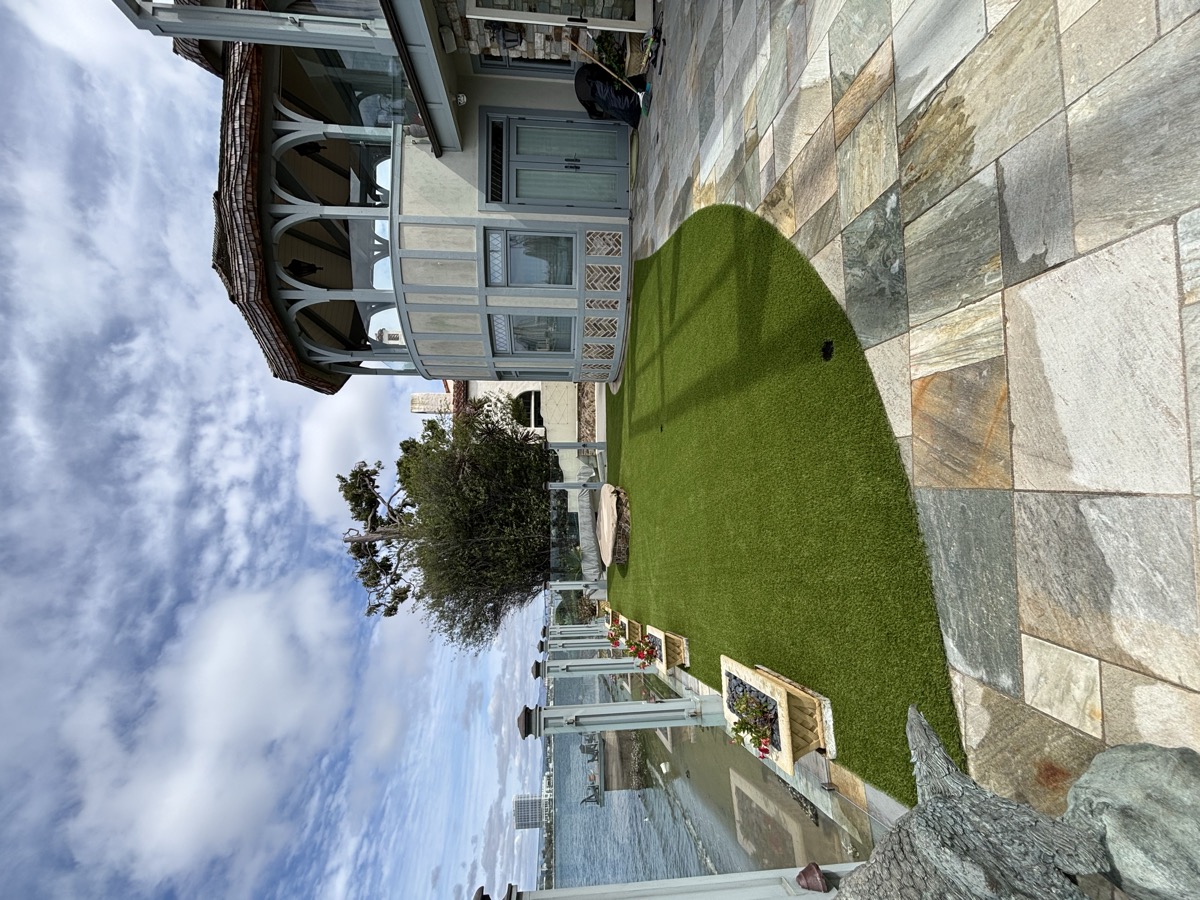
Laying sod in July
Summer installs are unforgiving. Cut sod is a harvested plant with no root contact, and on a 90 degree afternoon with full sun coming off the bay it starts cooking on the pallet.
We lay early in the day and water each section as it goes down rather than waiting for the whole yard to be finished. Seams get knocked tight so the edges do not curl and brown.
First two weeks it wants water twice a day, short cycles. Then we back it off hard, because a lawn watered lightly forever grows a shallow root system and dies the first week somebody goes out of town.
Sam walks it back at the two week mark and again at a month. If the sod knits and you can no longer find the seams with your foot, the prep underneath was right.
If we laid sod at your place on 1st St or off B Ave, mentioning the street and the job in a Google review genuinely helps the neighbors two doors down find us.
Real grass is not automatically the harder choice
Between the pitch auction and coaches pushing for grass fields wherever it is practical, natural turf is having a moment in the sports conversation. On a Coronado lot the calculus is simpler than the debate suggests.
A living lawn on a metered water bill is a real cost, which is why we usually shrink the lawn instead of deleting it. One well-built patch of sod where the kids and the dog actually use it, and drought-tolerant planting for the rest of the yard.
That is the plan we draw on most of these properties. See how it is built on our Coronado sod and turf installation page, or the streets we work on the Coronado landscaping page.
Somebody is going to pay real money for a framed square of that pitch, and it will be brown inside of a week. The sod we set on J Ave has to still be alive in ten years, with salt on it every evening and a mower over it every Tuesday. Different job entirely.