
Does creeping thyme work as a lawn substitute in San Diego?
Creeping thyme works in San Diego as a low-traffic lawn substitute in full sun with sharp drainage, planted from flats at 6 to 12 inch spacing. It will not take daily foot traffic, dogs, or shade, so we use it in parkways, side yards, and between pavers rather than a main play lawn.
Last updated: August 2026
People ask for creeping thyme after seeing a photo of a purple carpet somewhere with real winters. Then they want it on a Coronado front lawn that the dog crosses forty times a day.
That is where the conversation usually turns.
Where creeping thyme actually holds on a coastal lot
Full sun, at least six hours. Soil that drains. Water off a drip line, not a spray head throwing 1.5 gallons a minute across a bed that only wants a fraction of that.
We plant it in parkway strips, in the gaps between paver treads, and along walkway edges where people step occasionally and not constantly. On the older Coronado lots off B Ave and C Ave, the tight side yards under mature trees are exactly where it fails, because thyme in shade goes leggy, thins out, and then the weeds take the bare spots.
Salt is the other factor. Wind off the bay puts salt on every leaf by evening on Ocean Blvd and 1st St, and thyme handles that better than most turf but worse than the natives we lean on for exposed frontage.
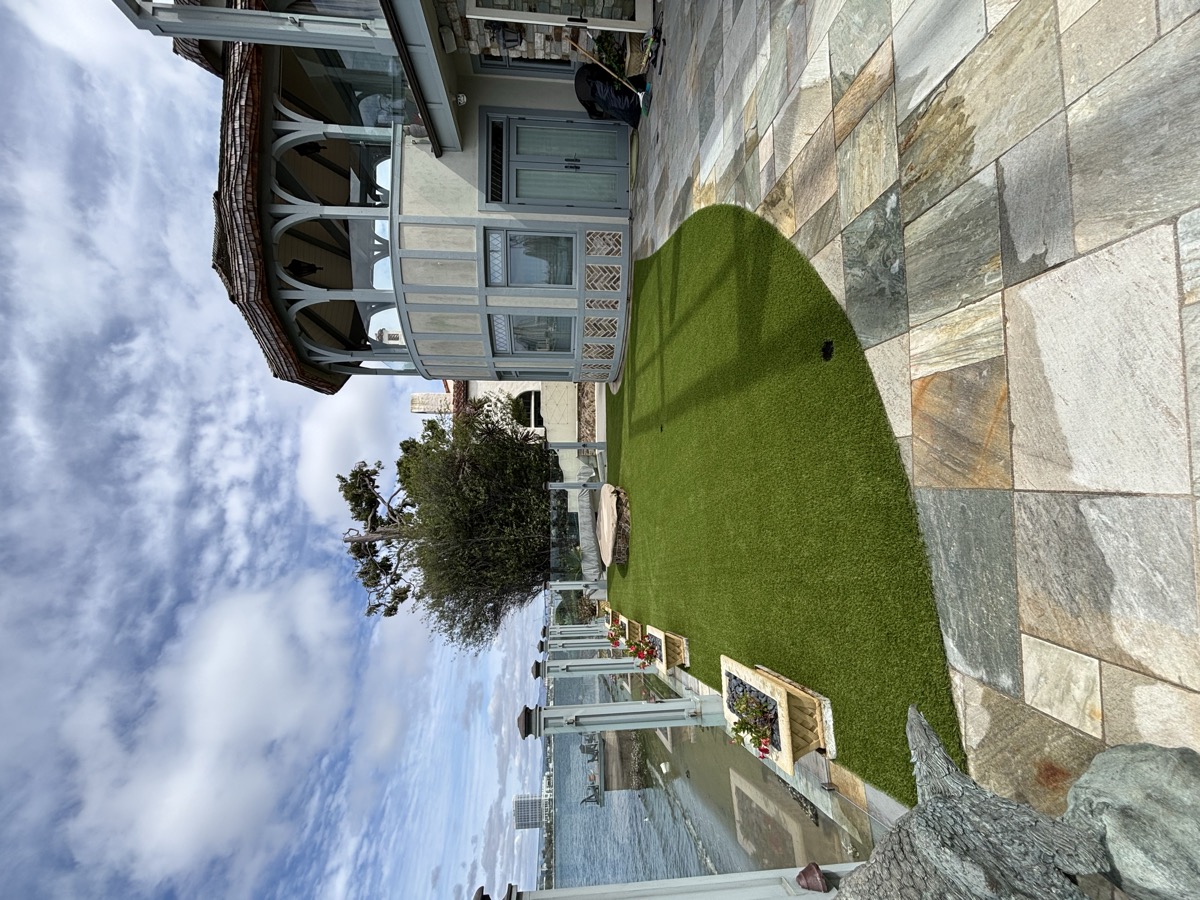
How creeping thyme compares to the other ground covers we plant
| Ground cover | Foot traffic | Sun | Where we use it |
|---|---|---|---|
| Creeping thyme | Light, occasional | Full sun, 6+ hours | Parkways, paver joints, walkway edges |
| Dymondia | Light to moderate | Full sun | Flat front yards, between stepping stones |
| Kurapia | Moderate | Full sun | Larger open areas replacing sod |
| Sod | Heavy, daily | Sun to part shade | Play lawns, dogs, kids |
If a yard has children and a dog, we install sod and design the water use around it. Pretending a thyme carpet will survive that is how a client ends up paying twice.
What it costs to convert a strip to thyme
The plants are the cheap part. Prep and irrigation are not.
We till 2 to 3 inches of compost into the top 6 inches of soil, because island soil compacts and thyme roots will not chase down through a hardpan. Then the spray heads come out and drip goes in, usually 0.9 GPH emitters on a grid, which is a plumbing change more than a planting change. A small parkway strip converted properly lands in the low four figures once you count demo, haul-out, soil, drip conversion, and plants. A larger front yard runs well past that.
Plugs from flats at 6 to 12 inch spacing fill in over a season or two. Tighter spacing costs more up front and closes faster. We usually recommend tighter on anything the street sees.
The mistake we see most
Somebody rips out sod, plants thyme, and leaves the old spray heads running the same schedule. Six weeks later the crowns rot in the wet spots and the high corners have gone crisp.
Thyme wants to dry between waterings. Sod does not. Running one schedule for both is the single fastest way to kill a conversion, and out here the corroded plated hardware in those old systems is already throwing uneven coverage before you change a single plant.
And salt air keeps working on it. We spec brass and stainless heads with pressure-rated PVC on every coastal system for that reason.
More on what we plant instead in the drought-tolerant ground covers we actually plant on Coronado lots, or see the whole approach on our drought-tolerant landscaping page.
If we converted a strip at your place, mention the neighborhood and what we planted in your Google review. That detail helps the next homeowner more than a star rating does.