
How often should a Coronado lawn be mowed?
Most Coronado lawns need mowing every seven days from March through October, then every ten to fourteen days in winter. Never take more than a third of the blade in one pass, and hold cool season blends at 1.5 to 2 inches so roots stay shaded through afternoon sun off the bay.
Last updated: August 2026
We get asked this on almost every walkthrough, usually right after somebody has scalped their own lawn in July and watched it go straw colored in four days.
The one third rule is not a guideline we made up. Cut more than a third of the blade at once and the plant dumps root reserves into regrowing leaf, which on a salt exposed lot near Ocean Blvd is the difference between a lawn that recovers and one that thins out.
What cutting height works on this island
Height changes by grass type, and Coronado lawns run both cool and warm season blends depending on when they went in.
| Grass type | Mowing height | Growing season frequency |
|---|---|---|
| Tall fescue blends | 2 to 3 inches | Every 7 days |
| Perennial rye and bluegrass | 1.5 to 2.5 inches | Every 7 days |
| Bermuda and warm season | 0.75 to 1.5 inches | Every 5 to 7 days at peak |
| All types, winter | Raise a half inch | Every 10 to 14 days |
Higher is safer here. A taller blade shades its own root zone, and on the 1st St frontages that take full afternoon light off the water, that shade is doing real work.
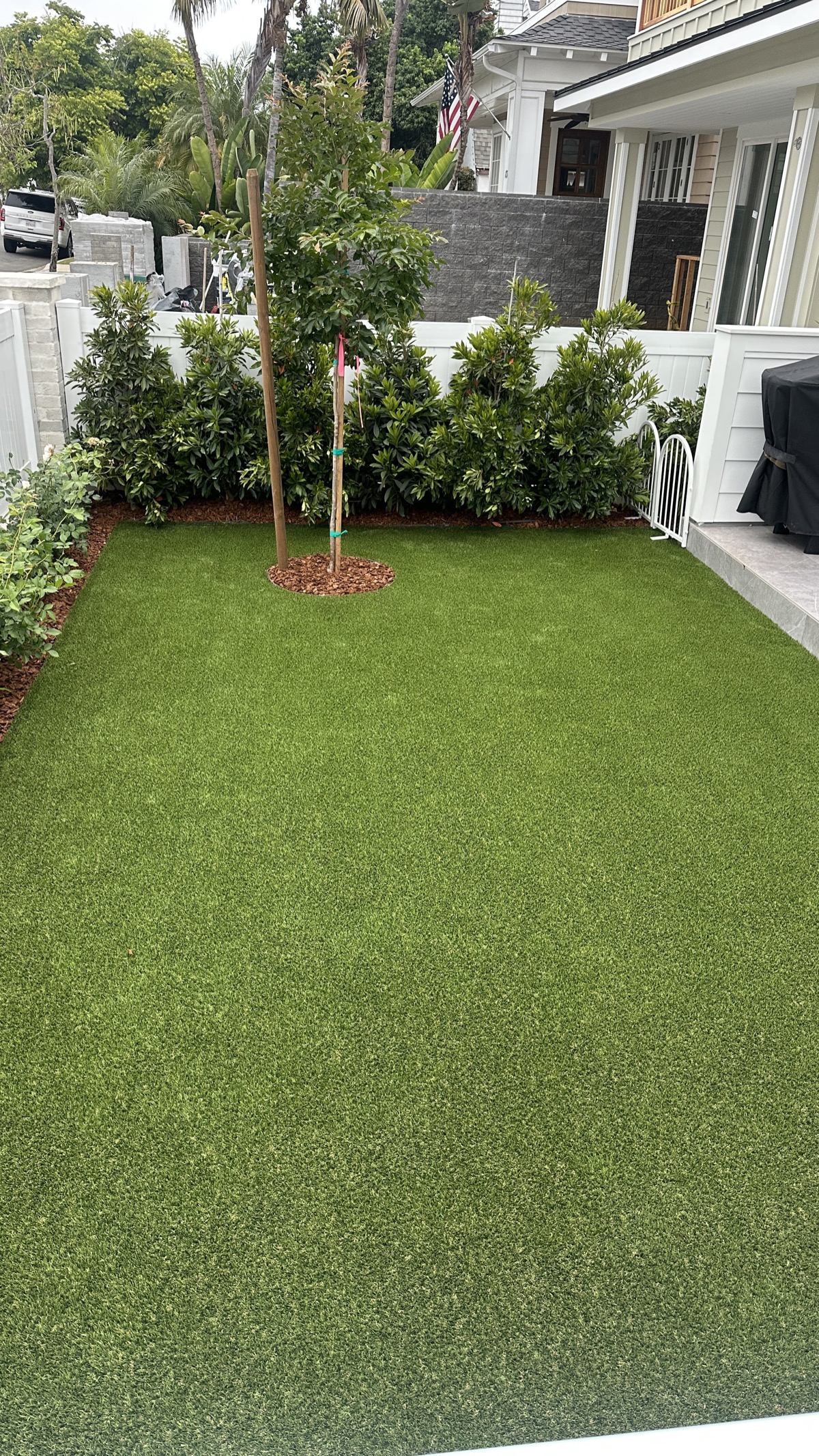
Does salt air change how a Coronado lawn is cut?
It changes what happens after the cut.
Salt sits on the blade by evening on the bayfront blocks. A clean cut seals over fast. A torn cut from a dull blade leaves ragged tissue that browns at the tip, and on a lawn that already fights salt load, those tips go tan across the whole yard within a week.
We sharpen every 20 to 25 hours of run time. That is roughly every two to three weeks in the growing season. It is the least glamorous part of the job and the one that shows most.
How much water does a Coronado lawn need?
Two short passes beat one long soak.
We run six to eight minutes, wait about an hour, then run the same zone again. On the sandy coastal soil a single long cycle sends water down the walk instead of into the root zone, and Coronado's metered rates make that a bill you can watch climb.
Early morning, always. Overhead water sitting on the leaf overnight, combined with salt residue, burns foliage on the exposed frontages. And the irrigation itself has to survive out here. Brass and stainless heads on pressure rated PVC, because plated hardware pits out within a season and then you are trenching to reach a seized valve.
What about the tight lots off B Ave and C Ave?
Some of those side yards run 36 inches wide with a mature tree canopy overhead. A strip of sod under that canopy almost never holds.
We stopped trying to keep lawn alive in those spots. Ground cover goes in instead, and the lawn stays where the sun and the foot traffic actually are. The yard reads better and nobody pays twice to replant the same shaded strip.
What drives the cost of keeping it up
Lot size matters less than hedge count and access. A yard with 90 feet of street facing hedge held near the 42 inch design review height takes real pruning time, and pruning to keep the interior wood alive takes longer than shearing the outside.
We break the numbers down in what we charge to maintain a Coronado yard. The lawn care service page covers what a weekly visit includes, and the irrigation page covers what we set in the ground.
Sam walks every property himself before we quote anything. If we already maintain your lawn on B Ave or J Ave, mention the street and the work in your Google review.